Programmes Who You Are Why WinSkill Insights Take the quiz

Programme · 9 months · Online

Certified Nutrigenomics Specialist

A nine-month online diploma for medical and allied healthcare professionals stepping into personalised, biology-aware preventive care. Built for clinicians who want the science and the practice to match.

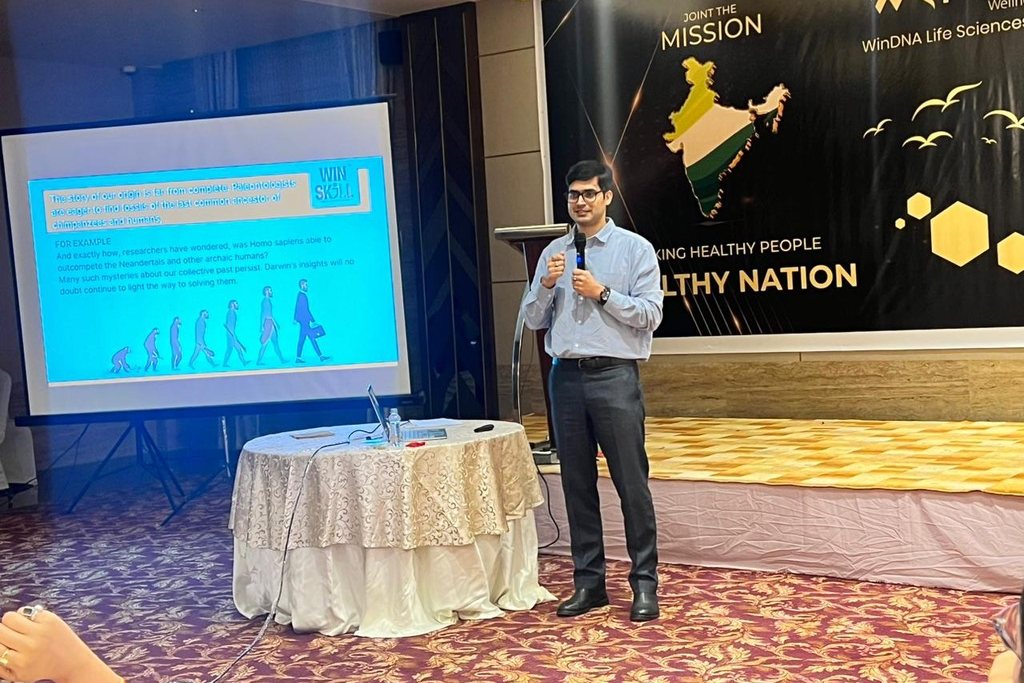
A WinSkill teaching session in progress
WinSkill teaching session

Duration

Nine months

Delivery

100% online

Credential

Sambalpur University-recognised

Cohort

Limited intake

What you become

What you can do at the end of nine months.

The CNS Diploma is built around clinical fluency, not theoretical familiarity. Four outcomes you should be able to demonstrate by the time the programme ends.

01

Read a nutrigenomic report with clinical fluency.

Interpret SNPs across folate metabolism, vitamin D pathways, lipid handling, detoxification capacity, and the other clinically meaningful areas. Explain what they mean to the patient sitting in front of you, without overstating the science.

02

Translate genetic data into personalised guidance.

Move from the genomic interpretation to a practical, evidence-linked plan the patient can follow. Build interventions that respect Indian dietary patterns, food access, and family context.

03

Integrate genetics with microbiome and lifestyle.

Read the patient as a system. Understand where the genetic layer and the microbiome layer reinforce each other, where they disagree, and how lifestyle factors sit alongside both.

04

Build a preventive nutrition practice.

Whether you work in a hospital department, run a clinic, or build an independent consultancy, the credential and the clinical framework let you operate as a recognised specialist in a field still being formed.

Who the programme is for

Built for clinically trained professionals.

The CNS Diploma is designed for healthcare professionals who already work with patients and want to add genomics and personalised nutrition to their practice. It is not an entry-level course.

Every cohort goes through a short application review. Not every applicant is admitted, and that is what protects the integrity of the credential and the cohort experience for the people who are.

What you learn

Five modules. Built around clinical relevance.

The curriculum is structured around what a clinically trained professional actually needs to operate confidently in this field. Academic completeness for its own sake is not the goal.

01

Genetics for healthcare professionals

The genome, the variant, the SNP. Why clinical reasoning now requires a working understanding of human genetic variation. No prior genetics background is assumed; the goal is fluency, not specialisation.

02

Nutrigenomics core

The gene-nutrient interactions that matter in practice. Methylation, lipid metabolism, vitamin pathways, detoxification, oxidative stress response. Each topic anchored to where it changes a clinical conversation.

03

Reading a nutrigenomic report

The interpretation framework. How to read a WinDNA-style report end to end, where its scientific claims are anchored, what to highlight to the patient, what to flag for follow-up, and what not to overpromise.

04

Microbiome and personalised nutrition

How gut diversity, inflammation patterns and food response patterns sit alongside the genetic picture. Where the two layers reinforce each other, where they diverge, and how to communicate the integrated view to a patient.

05

Clinical practice and case work

Counselling skills. Building a personalised intervention plan. Adherence, family context, and cultural and dietary patterns specific to India. The programme closes with case-based practice drawn from real clinical situations.

Certification is awarded after a case-based assessment and a final review. The credential is recognised by Sambalpur University.

How the programme runs

Online, structured, and built around working professionals.

Most participants are working clinicians, dieticians or allied healthcare professionals. The schedule is designed so that the programme runs alongside an existing practice, not in place of it.

Why this credential matters

The next ten years of Indian healthcare will need this kind of specialist.

The shift in Indian healthcare is structural, not cyclical. Non-communicable diseases now account for the majority of deaths in the country. Lifestyle, nutrition and genetics are no longer side conversations in medicine. They are becoming the core of preventive practice.

Clinically trained professionals who can read genetic variation, interpret nutrigenomic data, and translate biology into personalised guidance are still rare in India. The next ten years will require them in numbers the system has not yet built. Early credentialed specialists in this field carry both the responsibility and the opportunity to shape what nutrigenomic practice looks like as it grows.

The Certified Nutrigenomics Specialist credential is recognised by Sambalpur University, anchoring it within institutional academic infrastructure rather than treating it as a short course. The qualification is intended to be defensible in any clinical setting and to remain relevant as the field continues to mature.
Where graduates work

Three kinds of practice the credential opens up.

The CNS Diploma is built to translate directly into clinical and consulting work. Graduates typically move into one of three settings, sometimes across more than one.

Clinical practice

Private clinics, hospital wellness departments and integrative medicine centres adding a preventive genomics arm. Often a natural extension for clinicians already advising on lifestyle and nutrition.

Diagnostic and lab roles

Genomic and microbiome testing labs that need clinically literate report interpretation, patient-facing consultation, and a bridge between the science and the consumer experience.

Independent consultancy

Specialists building their own precision nutrition practice, often combined with an existing patient base. The credential gives the practice institutional weight from day one.

How to apply

Three steps. About a week.

The application is short. The conversation that follows is what decides whether the programme is the right fit for you and for the cohort.

01

Send a short application

Tell the team about your clinical background, where you currently work, and why preventive genomics matters for your practice. Two or three paragraphs is enough.

02

A brief review and conversation

WinSkill responds with a short call or message exchange. The goal is mutual fit. The team is honest if the programme is not right for your stage of practice.

03

Intake confirmation and onboarding

Once admitted, you receive the cohort schedule, the fee structure, the onboarding material and access to the first module. The next nine months begin from there.

The fastest way to begin is a message. Most applications are answered within the working day.

Begin the application on WhatsApp